
Talent Search Partners, Inc.

TALENT SEARCH PARTNERS, INC.

February 2026

Many Executives Are Playing Jenga With Their Talent

Executive leaders are crying out for predictability and structure, yet they continue to engage in the same risky behaviour that has driven them to frustration. Our approach to talent acquisition is structurally weak, and one bad decision can bring down everything you’ve worked hard to build. Now is not the time to cut corners when it comes to the most important function of your business, talent. Given the tightness of the marketplace & resistance from top talent to engage in the career exploration, finding the right people and keeping them beyond a year is proving to be a challenge. We are okay to have multiple recruiters working on a given search at the same time, yet we employ the services of one mechanic if our car needs an oil change or one law firm if we are being sued. I’ve never heard anyone say that they were going to use multiple surgeons to remove an organ to increase the chances of a successful operation. Despite the poor results and longer wait times to fill positions, decision makers are okay to stick with the status quo, and this has somehow translated to be what’s best for business. It’s like repeatedly hitting your head against the wall and complaining about your headache. What’s worse is that recruiters are complicit in this tragedy of a recruitment process. We’ve done a poor job of communicating our value proposition, partly because most recruiters don’t know what that value proposition really is beyond just supplying resumes. When you understand your value, you don’t need to negotiate, and you can comfortably walk away from something with no regrets.

Many Executives Are Playing Jenga With Their Talent Read More »
The Question That Has Confused Humanity Since The Dawn Of Time

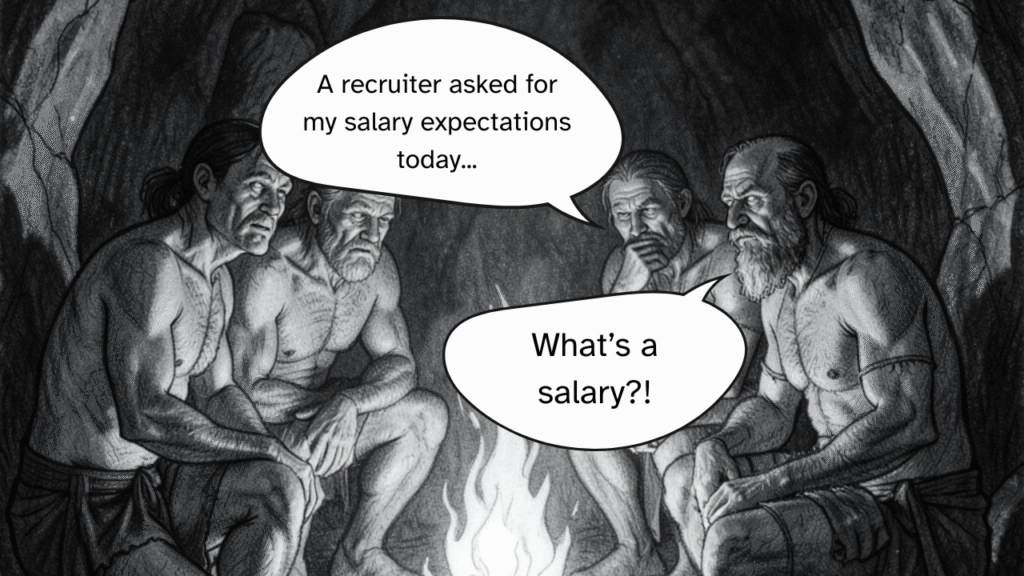
The compensation topic has been a point of contention between recruiters/HR and candidates since the dawn of civilization. The compensation conversation typically plays out like this: Recruiter: How much are you presently making? Candidate: How much can your client pay? Recruiter: It’s flexible depending on… Recruiter: What are your salary expectations? Candidate: How much can they pay? Recruiter: Can you provide a range? Candidate: $100,000 to – $200,000 annually Recruiter: Would you take $100,000? Candidate: No …and the game of ‘show me your hand’ continues until both sides are worn out and frustrated with each other… The foundation of this conversation is a lack of trust. Recruiters want the best available talent at the cheapest cost; candidates want the highest number from the available range; hiring managers want to pay the lowest salary and expect candidates to produce to the level of the top end of the range. My approach to this topic is evolving and will continue to evolve until I officially retire. It’s for certain that compensation continues to be the primary motivator for a career change. Instead of haggling and wasting precious time, wouldn’t it be far better for candidates to disclose what they need in order to make the career move? NEED and WANT are distinct and should be treated as such in this context. Hiring managers would be far more receptive if they were told what a candidate NEEDS to earn versus what they WANT to earn. When a company hears “want”, they associate that with greed or an unrealistic demand, and that typically creates unnecessary hurdles to the end goal. “What do you need to earn” bleeds empathy & compassion. For years, we’ve heard executives talk about their budgets, what they’d prefer to pay, or what they think a person is worth, and recruiters often manipulate this to their own advantage. Let’s replay the same scenario above, this time framing the question a new way: Recruiter: What do you need to earn? Candidate: What? Recruiter: What do you need to earn to make this career move? Candidate: Well, I’m currently making…(Recruiter Interrupts)… Recruiter: Irrelevant. You’re not looking for something new. You’re a high performer in your current role, and I contacted you about this opportunity. What do you need to earn to justify the move to yourself and your family; leave the seniority that you’ve built up with your present company; drive an extra 25 minutes which will make you 25 minutes late for dinner time every night & start over with a new company in a role that could be considered a gamble? What do you need to earn? Candidate: I never thought of it like that. Recruiter: Think about it and get back to me. The result of this is a sober & honest answer to this question that a recruiter would then communicate to their client with all the relevant context. Approaching the salary question in this way will eliminate negotiations, put the onus on the customer to meet the expectations, and put pressure on the candidate to deliver. Try this and let me know if it works for you.

The Question That Has Confused Humanity Since The Dawn Of Time Read More »